Issue 03 · February 2026 · Black History Month

February feels like an invitation to slow down and really look at the stories that have shaped us, including the ones we weren't taught in school. Black History Month matters to me personally because I believe, deeply, that stories save people. So many of the stories that have cracked something open in my imagination, my empathy, and my understanding of the world, were written, spoken, or lived by Black men and women who refused to let their voices be silenced.
I've learned so much about the legacy of storytelling within Black culture. For Black Americans, storytelling has never been a luxury. It's been a lifeline. During slavery, when literacy was criminalized and the written word was weaponized as a tool of oppression, oral tradition became the primary way culture, identity, and dignity were preserved. Stories carried what couldn't be documented. They held the names of ancestors, the memory of homelands, the wisdom of elders, and a counter-narrative insisting on the inherent value of every human being.
That legacy didn't end with emancipation. It evolved. It became blues and jazz music as autobiography, as protest, as joy. It became the Harlem Renaissance, a flowering of Black literary and artistic brilliance that changed American culture forever. It became James Baldwin writing with surgical precision about what it means to love a country that doesn't yet love you back. It became Maya Angelou teaching the world that the caged bird still sings. It became Toni Morrison insisting that Black stories deserve to be told on their own terms, in their own language, without apology or translation for a white gaze.
Today, it's children's book authors, poets, filmmakers, podcasters, and everyday people continuing to ask the same essential question every great storyteller has always asked: do you see me? Do you know my name?
This month, I want to encourage you to seek out a story you haven't heard before. Pick up a book by a Black author. Watch a documentary. Let curiosity lead you somewhere new.
A few of my favorite books celebrating Black voices are below.

Milo Imagines the World by Matt de la Peña & Illustrated by Christian Robinson
There are picture books that are sweet, and then there are picture books that evoke something deep in your gut. Milo Imagines the World is the second kind. On the surface it's a story about a boy on a subway ride, sketching imaginative lives for the strangers around him. Underneath, it's about what we assume, what we miss, and what it really means to see another person.

Roll of Thunder, Hear My Cry by Mildred D. Taylor
I was somewhere around ten years old when I first read Roll of Thunder, Hear My Cry, and I've never forgotten Cassie Logan. Set in Mississippi during the Great Depression, it's the story of a Black family fighting to keep their land, their pride, and their sense of self in the face of injustice, told through the eyes of a child just old enough to start understanding what the world is asking of her. A Newbery Medal winner and one of TIME's 100 Best YA Books of All Time, this book has shaped generations of readers, including me. I hope it finds its way into your hands this month.
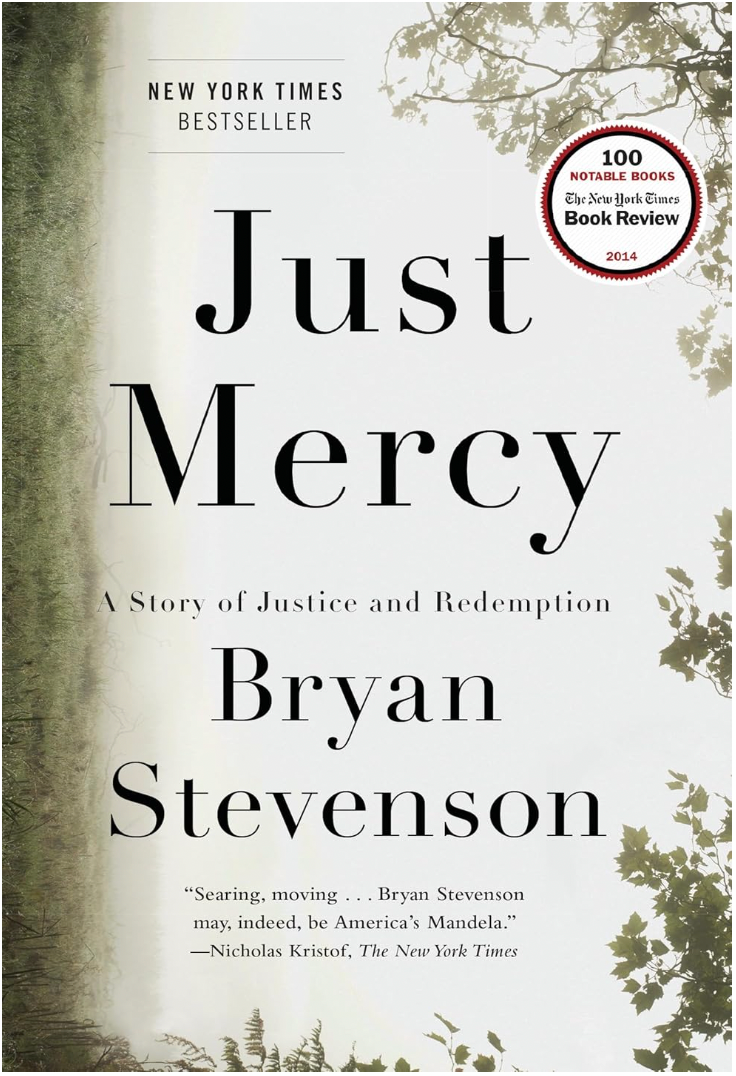
Just Mercy: A Story of Justice and Redemption by Bryan Stevenson
Bryan Stevenson is a rare human being who makes you want to be more brave and more kind. Just Mercy is his story of leaving behind a comfortable legal career to fight for people on death row, of a justice system that too often punishes poverty and perpetuates racial inequality, and of what it looks like to refuse to look away from the realities that make us uncomfortable. He shares all of this without ever abandoning a deep sense of hope and a conviction that people are inherently good.
Representation in storytelling matters so deeply, not just for Black children who need to see themselves reflected back in the pages of a book, but for all of us. The stories we consume shape the world we're able to imagine. And a world with more stories in it is a world with more capacity for empathy, connection, and change.
Until next month,
Cathi


Comments